
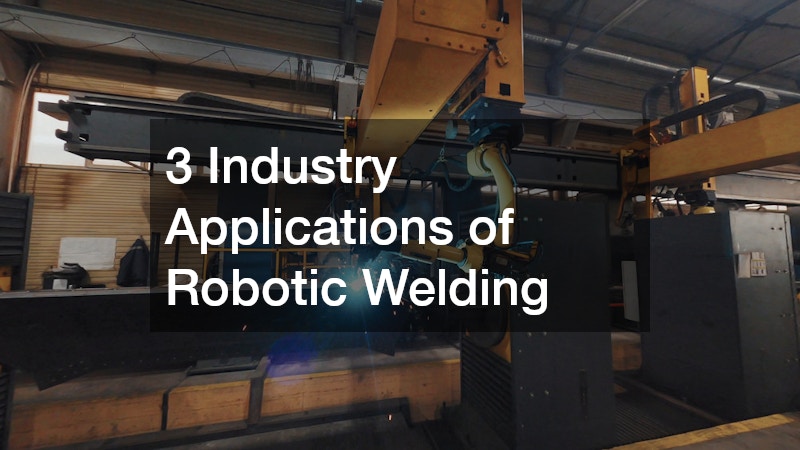

The advancement of welding technology has undergone significant changes over the years, with robotic welding becoming a prominent solution across numerous industries. This technology is not only enhancing precision but is also acclaimed for its cost-effectiveness. Robotic welding service providers are continually refining their techniques to meet the evolving demands of modern manufacturing, making the process an integral component of production efficiency.
1. Automotive Industry
In the automotive industry, robotic welding has transformed the way manufacturers assemble vehicles. The use of robotic systems ensures consistency and precision, critical aspects in the production of automotive parts.
Through the incorporation of robotic welding services, the industry achieves a high throughput with minimal error rates. Automotive manufacturers deploy robots to perform welding on critical joints and structures within vehicles, guaranteeing quality and durability. This integration not only enhances production speed but also reduces material waste through accurate application.
One particular application of robotic welding in the automotive sector is the assembly of frames and body parts. This automated process has significantly reduced the amount of manual labor required, simultaneously minimizing potential human error. Manufacturers entrust robotic welding services to maintain the stringent quality standards expected in today’s high-performance vehicles. Furthermore, robotic systems in automotive welding often encompass advanced sensors and feedback loops. This technology allows for real-time adjustments to welding parameters, thereby avoiding defects and improving overall part integrity.
The automotive industry is also utilizing robotic welding for the production of electrical vehicle battery trays, a critical component in new energy vehicles. As the demand for electric vehicles grows, manufacturers require efficient and reliable welding solutions. By leveraging robotic welding services, manufacturing plants can adapt to various designs and configurations swiftly. These robotic systems ensure each weld is executed with precision, which is crucial for maintaining the structural integrity needed to house the battery packs. Efficiency, reliability, and quality control are enhanced, facilitating the production of innovative vehicles that meet consumer expectations.
2. Aerospace Manufacturing
Aerospace manufacturing is another sector where robotic welding has made significant inroads. The precision required in aerospace components often necessitates the highest level of detail and accuracy—areas where robotic systems excel. Robotic welding services in aerospace ensure stress-free and durable welds, critical for parts that encounter extreme conditions. The aerospace industry demands components that comply with specific regulatory standards and can withstand rigorous testing. Adopting robotic welding aids in achieving these stringent requirements while maintaining operational efficiency.
The fabrication of engine mounts, turbine blades, and body sections in aircraft is increasingly relying on robotic welding. By implementing robotic welding services, manufacturers are able to reduce lead times while maintaining the accuracy required to ensure flight safety. The precision attributed to robotic systems plays a crucial role in reducing inconsistencies that could lead to structural weaknesses. Aerospace manufacturers also benefit from robots that can execute complex welds on intricate parts, demonstrating their versatility in production. The seamless integration of these robotic systems promotes continuous improvement in aircraft manufacturing.
In recent developments, the use of lightweight materials such as composite alloys has become more prevalent in aerospace, and robotic welding has adapted to address these needs. The accuracy and control offered by robotic systems are essential when handling different materials that react variably under high temperatures. Robotic welding services accommodate this diversity by providing customized solutions for welding different alloys, ensuring each component’s structural integrity is uncompromised. Manufacturers gain a competitive edge when they can assure customers of consistent and dependable components through innovative welding technology. This application in aerospace signifies the forward momentum towards increasingly sophisticated welding solutions.
3. Construction and Infrastructure
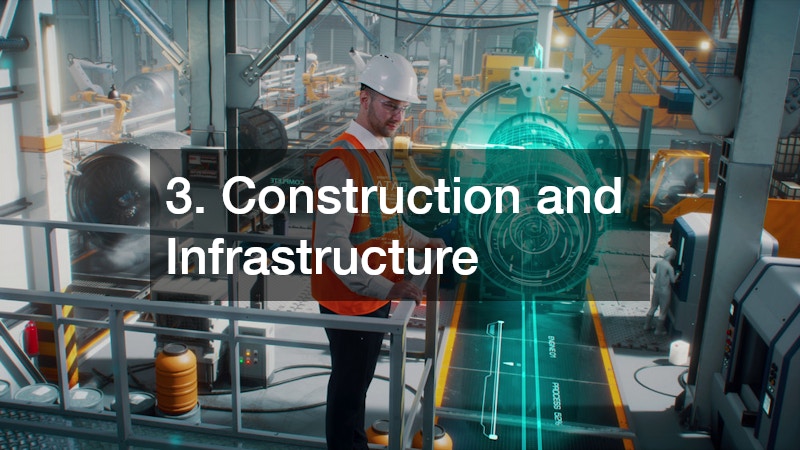
Robotic welding has also revolutionized the construction and infrastructure sectors. From steel beams to framework structures, the consistency robotic welding service provides ensures the quality and durability of welded components. In large-scale projects encompassing bridges, skyscrapers, and facilities, robotic systems deliver the necessary efficiency and precision. The integration of these systems into infrastructure projects not only contributes to faster construction timelines but also increases safety levels on construction sites. By minimizing the physical labor required for welding tasks, workers can focus on supervision and operational management.
The adaptability of robotic welding is evident in its ability to perform sweepingly different kinds of welds under various conditions. Construction sites often present challenges such as space restriction and environmental factors; robotic welding services are designed to accommodate these complexities. Robots, with their compact and flexible nature, can access difficult-to-reach areas which might pose risks to human operators. This adaptability proves invaluable in projects where precision welding is required across varying conditions. As a result, construction companies can rely on these systems to maintain structural integrity throughout their ventures.
With the rise of modular construction, robotic welding has further advanced to meet specialized needs in prefabricated segments. Prefabrication allows for sections of a building to be assembled ahead of time, and robotic welding service enhances this process by ensuring strong and precise connections. By employing robots in off-site manufacturing plants, construction companies achieve higher quality control over each weld. This elevated control reduces potential errors during the assembly of prefabricated structures on-site, expediting project timelines and minimizing delays. The capability of robotic welding to adapt to trends like modular construction underlines its indispensable role in modern infrastructure development.